Environmental Benefits and Sustainability
Biomass gasification earns its green-energy label on two counts: it displaces fossil fuels with a renewable carbon cycle, and it turns waste residues into both energy and useful materials. Those benefits are real — but only when the feedstock is sourced responsibly.
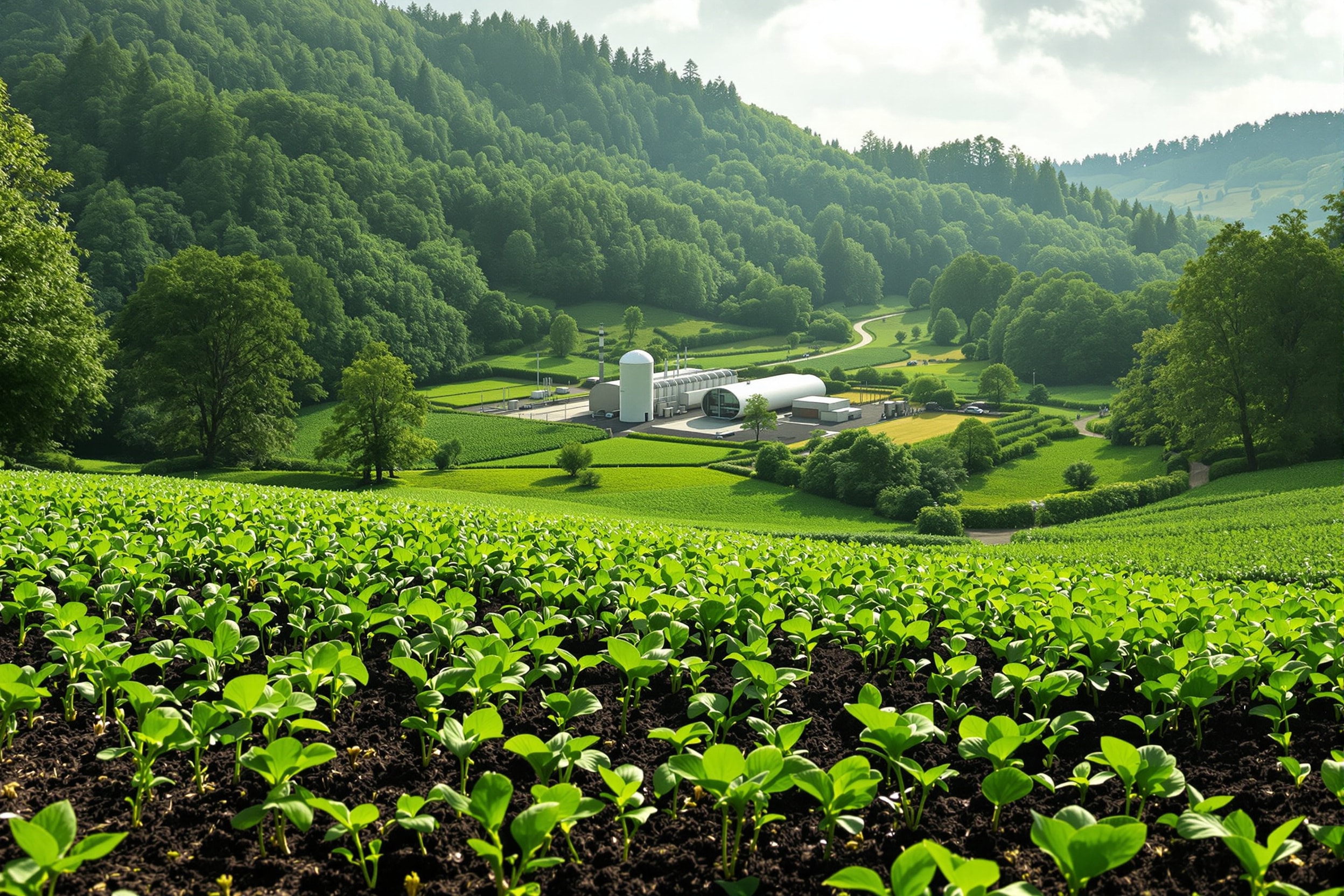
The renewable carbon cycle
The carbon released when producer gas burns is biogenic: it was drawn from the atmosphere by plants as they grew, and returns there when the biomass is used, rather than adding fossil carbon locked away for millions of years. When the feedstock is regrown or is a residue that would have decomposed anyway, the cycle is close to carbon-neutral. This principle underpinned the inclusion of biomass energy in mechanisms such as the Clean Development Mechanism (CDM), and it remains central to how the Intergovernmental Panel on Climate Change accounts for sustainable bioenergy.
The counterfactual matters
The environmental result also depends on what would have happened to the residue without the project. Material that would have been openly burned, left to decay or transported a long distance presents a different baseline from biomass already serving a useful purpose. Credible assessment therefore defines the feedstock source, alternative fate, transport radius and any soil nutrients removed with the harvest.
Boundaries matter just as much. An assessment that counts only the gasifier can miss drying electricity, replacement fuel during maintenance, ash handling and delivery of the useful heat or power. Stating those boundaries clearly does not weaken the case for bioenergy; it makes comparisons reproducible and keeps favorable assumptions visible.
Cleaner than the fuel it replaces
Substituting producer gas for diesel, furnace oil or coal cuts the sulphur, particulate and net greenhouse emissions associated with those fuels. Displacing diesel gensets in particular — common in rural and industrial settings — removes a notably dirty, expensive source of power. The clean, controllable flame of gas also tends to burn more completely than raw solid-fuel combustion.
Valuable by-products
Unusually among renewables, gasification yields saleable materials alongside energy, improving both economics and resource efficiency:
- Activated carbon — when coconut shell is the feedstock, the char by-product can be processed into activated carbon, a valuable product in its own right.
- Precipitated silica — the ash from briquetted rice husk can be further processed to recover precipitated silica, an industrial material.
- Biochar — char from other woody biomass has a high fixed-carbon content and is a saleable commodity, usable as a soil amendment that can also lock carbon into the ground.
These outputs turn what would be waste streams into revenue and useful materials — a practical example of the circular use of biomass feedstocks.
Sustainability caveats
Bioenergy is only genuinely green when the biomass is sourced responsibly. Clearing natural forest for fuel, or diverting land from food, would undo the benefits. The sustainable model relies on agricultural and forestry residues and on purpose-grown energy crops that do not compete with food or deplete soils. IEA Bioenergy and the Food and Agriculture Organization of the UN both stress responsible sourcing, land use and life-cycle accounting as the conditions under which biomass delivers on its promise.
Life-cycle thinking and air quality
An honest environmental account looks at the whole life cycle, not just the moment of combustion. Collecting, drying, sizing and transporting biomass all consume some energy, so the net benefit depends on keeping fuel supply chains short and efficient — another argument for using local residues. Where the sums are done properly, sustainably sourced biomass delivers large net reductions in greenhouse gases against the fossil fuels it displaces. There are important air-quality co-benefits too: replacing the open-field burning of crop residues — a major cause of seasonal smog across many farming regions — with controlled gasification removes a significant pollution source while capturing the residue's energy. Clean, complete combustion of a conditioned gas also emits far less soot and unburnt matter than the smouldering of solid fuel.
The EIA's account of biomass and the environment notes that wood smoke contains carbon monoxide and particulate matter. It also identifies harvesting wood faster than trees grow as a cause of deforestation, and says fast-growing fuel trees and fuel-efficient cookstoves can help slow that loss. These points call for separate questions about smoke and fuel supply: where does the wood come from, and what is released when it is used? The household cooking discussion applies those questions to cooking energy. Fuel origin and stove emissions each deserve attention; describing a fuel as renewable does not by itself establish the air quality of a particular cooking arrangement.
Carbon in the soil
The biochar left by some gasification and pyrolysis routes has a second climate role beyond its energy value. Because it is a stable, carbon-rich solid, biochar worked into farmland can lock a portion of the biomass's carbon into the ground for decades or longer, while also improving soil structure and water retention. Where this is done sustainably, the combination of displacing fossil fuel and sequestering carbon in soil can shift a scheme from merely low-carbon toward genuinely carbon-negative. It remains a developing practice that demands careful, honest measurement — but it illustrates how thoughtfully applied bioenergy can do more than simply avoid emissions.
Waste valorization
Perhaps the strongest environmental argument is that gasification gives crop and wood residues a purpose. Instead of open-field burning — a major source of seasonal air pollution — or landfill decay, residues become clean energy plus useful by-products. That is a tangible win for air quality, waste management and rural economies alike, and it complements the wider renewable energy mix.